|
 |
Gonzalo Abellán (MATTECO & University of Valencia, Spain)
|
 |
|
|
|
 |
Carla Boix (University of Cambridge, UK)
Carla Boix-Constant is a doctor in Nanoscience and Nanotechnology by the University of Valencia (Spain), specializing in two-dimensional magnetic materials and van der Waals heterostructures based on inorganic and molecular layered crystals. Her work combines crystal growth, nanodevice fabrication, and low-temperature magneto-transport measurements to investigate emergent magnetic and electronic phenomena in advanced quantum materials. She is currently conducting her postdoctoral research as a Royal Society Newton International Fellow at the University of Cambridge.
|
|
|
|
|
 |
Andrés Castellanos Gómez (ICMM-CSIC, Spain)
Andres Castellanos-Gomez is a Research Professor at the Materials Science Institute of Madrid (ICMM-CSIC). His research focuses on the fabrication, characterization and applications of two-dimensional materials and van der Waals heterostructures, with particular emphasis on flexible, conformal and optoelectronic devices. In recent years, his group has developed roll-to-roll mechanical exfoliation as a scalable, solvent-free route to produce large-area films of van der Waals materials and integrate them into functional devices. He has authored more than 150 scientific publications and currently coordinates and participates in several European and national projects on scalable 2D electronics, including the ERC Synergy project SKIN2DTRONICS.
|
|
|
|
|
 |
Manish Chhowalla (University of Cambridge, UK)
Manish Chhowalla is the Goldsmiths’ Professor of Materials Science at the University of Cambridge. His research interests are in the fundamental studies of atomically thin two-dimensional transition metal dichalcogenides (TMDs). In particular, his group studies the optical and electronic properties of different phases of 2D TMDs. He has demonstrated that it is possible to induce phase transformations in atomically thin materials and utilize phases with disparate properties for field effect transistors, catalysis, and energy storage. Prof Chhowalla is a Fellow of the Materials Research Society, Institute of Physics, the Royal Society of Chemistry and Churchill College. He was the founding Editor in Chief of Applied Materials Today and is now the Associate Editor of ACS Nano. He has been on the Clarivate Highly Cited Researchers since 2016. Prior to Cambridge, Prof. Chhowalla was a Distinguished Professor at Rutgers University in New Jersey, USA. He was also the Director of the Institute of Advanced Materials, Devices & Nanotechnology at Rutgers. Before that, he was a doctoral student in the Electrical Engineering Department at the University of Cambridge and Churchill College. After his doctorate and Royal Academy of Engineering Postdoctoral Fellowship, Professor Chhowalla briefly worked in industry where he developed applications for “amorphous diamond”.
|
|
|
|
|
 |
Renhao Dong (The University of Hong Kong, Hong Kong)
Dr. Renhao Dong is currently an Associate Professor in the Department of Chemistry at The University of Hong Kong. His research group focuses on functional interfaces and crystalline polymer materials, with emphasis on 2D polymer ionic-electronic conductors and 2D framework membranes, as well as functions in (bio-)electronics, electrochemical energy technologies, and separation. Thus far, he has published over 150 peer-reviewed articles which have attracted more than 18500 citations with h-index of 64. He was the recipient of Clarivate Highly Cited Researcher in 2022-2025.
|
|
|
|
|
 |
David Écija Fernández (IMDEA Nanociencia, Spain)
Prof. David Écija leads the Nanoarchitectonics at Surfaces group at IMDEA Nanoscience. He is an expert in condensed matter physics, surface science, and molecular science, with a research focus on the design of functional nanomaterials on surfaces that are amenable to characterization by scanning probe microscopies and photoelectron spectroscopies. His main research interests include the synthesis of molecular compounds and nanomaterials for optoelectronics, complex quantum phases of matter, sensing and catalysis. His research has been widely recognized by the scientific community, including the award of the 2018 ERC Consolidator and the 2024 ERC Synergy grants.
|
|
|
|
|
 |
Hermenegildo García Gómez (Universitat Politècnica de València, Spain)
|
|
|
|
|
 |
Marco Gobbi (Materials Physics Center (MPC), Spain)
Marco Gobbi is an Ikerbasque Associate Professor and Ramón y Cajal Fellow at the Materials Physics Center (CFM-MPC) in San Sebastián, Spain, where he leads the Hybrid Quantum Materials group. He received his PhD from the University of the Basque Country in 2013 and then conducted postdoctoral research at the University of Strasbourg. He later held Marie Skłodowska-Curie, “la Caixa” Junior Leader, and Ikerbasque fellowships. He was selected as a Nanoscale Emerging Investigator in 2022 and has authored more than 85 scientific publications.
His research focuses on the molecular engineering of two-dimensional and van der Waals materials through surface functionalization and molecular intercalation. In particular, his group investigates how functional molecules can be used to tune superconductivity and magnetism in layered compounds, and to integrate the resulting hybrid materials into nanoscale devices.
|
|
|
|
|
 |
Cristina Gomez-Navarro (UAM, Spain)
Cristina Gómez-Navarro is Professor at the Universidad Autónoma de Madrid. Her research focuses on the mechanical and electrical properties of low-dimensional materials, with particular emphasis on graphene and two-dimensional materials, atomic force microscopy, and nanoscale tribology. Throughout her career, she has developed advanced AFM-based methodologies to investigate emergent electrical and mechanical phenomena at the nanoscale, including the effects of defects on the mechanical properties and friction of 2D materials.
She obtained her PhD from UAM in 2005 and subsequently carried out research at the Max Planck Institute for Solid State Research in Stuttgart as a Humboldt Fellow. She has authored more than 60 scientific publications, including papers in Nature Physics, Nature Materials, Nature Communications, Nano Letters and Physical Review Letters. She has received more than 12,000 citations and has delivered more than 20 invited talks at international conferences.
At UAM, she is also actively involved in research management, experimental infrastructure development, mentoring and science outreach. She currently heads the Experimental Area and the Equality Commission at IFIMAC, where she is leading the implementation of a micro- and nanofabrication facility and coordinating initiatives to promote female talent in science.
|
|
|
|
|
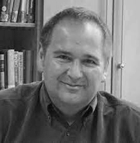 |
Thomas Heine (TU Dresden, Germany)
Thomas Heine, FRSC, MAE (PhD 1999, venia legendi 2006 TU Dresden) started his research group in 2008 at Jacobs University Bremen, moved in 2015 to University of Leipzig and 2018 to his current position as chair professor of theoretical chemistry at TU Dresden. He also holds part time professorships at the Helmholtz Center Dresden-Rossendorf, Yonsei University and a Distinguished Professorship at Ewha Womans University Seoul, South Korea. He is a Clarivate Highly Cited Researcher with more than 430 peer-reviewed articles, an h-index of 102 (ISI) / 113 (Google Scholar), and more than 48000 citations. Prof. Heine is elected member of the Review Board of Deutsche Forschungsgemeinschaft (DFG).
He coordinates DFG Collaborative Research Center 1415 “Chemistry of Synthetic 2D Materials, Priority Program PP 2244 “2D Materials: Physics of van der Waals [hetero]structures”, the DFG Researcher Training Group RTG 2861 “Planar Carbon Lattices”. He holds a prestigious ERC Synergy Grant (2DPolyMembrane) and a DFG Reinhart-Koselleck project (top funding scheme for individuals by DFG).
His current research interests focus on metal-free magnetic materials and of precision membranes for selective unidirectional ion transport.
|
|
|
|
|
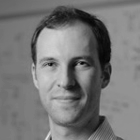 |
Thomas Kempa (Johns Hopkins University, USA)
Thomas J. Kempa is a Professor of Chemistry at Johns Hopkins University and has courtesy appointments in the Departments of Physics & Astronomy and Materials Science & Engineering. Professor Kempa’s research group develops new methods to prepare and study low-dimensional inorganic crystals, from nanoparticles to few-atom thick 2D sheets, whose exceptional properties render them intriguing platforms for optoelectronic, energy conversion, and quantum science studies. Professor Kempa is the recipient of numerous awards including the Moore Investigator Award, a DARPA Young Faculty Award, an NSF CAREER Award, a Dreyfus Foundation Fellowship, and others. He has also been honored as a Kavli Fellow by the National Academy of Sciences (NAS) and a Mercator Fellow by the German Research Foundation (DFG). In 2023, Tom was appointed a member of the Nano Letters Editorial Advisory Board. In December 2024, Tom began an appointment as Associate Editor at npj 2D Materials and Applications. Tom has also been elected Chair of the 2028 GRC on “2D Electronics Beyond Graphene.” He is also a founder and co-director of the Hub for Imaging and Quantum Technologies, an institute at Johns Hopkins University.
|
|
|
|
|
 |
Bettina V. Lotsch (Max Planck Institute for Solid State Research (LMU), Germany)
Bettina Lotsch is the Director of the Nanochemistry Department at the Max Planck Institute for Solid State Research (MPI-FKF) in Stuttgart, Germany, and holds honorary professorships at LMU Munich and the University of Stuttgart.
Bettina’s research explores next-generation material solutions for energy conversion, energy storage, and information technologies by combining the tools of molecular, solid-state and nanochemistry. Her current research focuses on the development of reticular materials for (photo)electrocatalysis, solid electrolytes for solid-state batteries, and optoionic materials and concepts for solar batteries, “dark photocatalysis” and photomemristive devices.
Bettina is an elected Fellow of the Royal Society of Chemistry (2014), the German Academy of Science and Technology, acatech (2025), and the National Academy of Sciences Leopoldina (2026). Her work has been recognized by a number of awards, including an ERC Starting Grant (2014), the EU-40 Materials Prize of the EMRS (2017), the Leibniz Prize of the DFG (2025), and the Elhuyar–Goldschmidt Award of the German Chemical Society & Royal Spanish Chemical Society (2026)
|
|
|
|
|
 |
Marcelo Lozada Hidalgo (The University of Manchester, UK)
Marcelo Lozada-Hidalgo is a Royal Society University Research Fellow and Professor of Condensed Matter Physics at the University of Manchester. His research focuses on proton and ion transport in 2D materials and field effects at electrode–electrolyte interfaces for renewable energy and unconventional computing. His high-profile publications include over a dozen articles in the Nature/Science family, including recent breakthroughs on field-driven selective acceleration of electrochemical processes (Nature 2024) and nanoscale imaging of proton transport through graphene (Nature 2023). He holds an ERC Starting Grant (2022) and fellowships from the Royal Society, Leverhulme Trust, and University of Manchester, and has led projects with industry partners such as Atkins and the US Army.
|
|
|
|
|
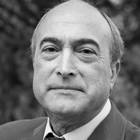 |
Nazario Martin (Universidad Complutense de Madrid, Spain)
Full Professor of Organic Chemistry at UCM and Deputy Director of IMDEA Nanoscience. H-index 100 (Google Scholar), 40,000+ citations, 650+ publications, 500+ invited lectures. Fellow of the Royal Society of Chemistry; Member of the Academia Europaea. Recipient of the Alexander von Humboldt Award, Richard E. Smalley Award, Jaime I Award, and Gold Medal of the RSEQ. Former President of the RSEQ (2006–2012) and COSCE (2015–2019). ERC Advanced Grant Holder. Doctor Honoris Causa, Universidad de La Habana and Universidad de Castilla-La Mancha.
|
|
|
|
|
 |
Aurelio Mateo Alonso (POLYMAT, University of the Basque Country, Spain)
Prof. Aurelio Mateo-Alonso “Koke” is an Ikerbasque Research Professor and head of the Molecular and Supramolecular Materials Laboratory at POLYMAT. He is also a Distinguished Professor at the University of the Basque Country (EHU).
His research focuses on the synthesis and supramolecular chemistry of π-conjugated systems that extend in one, two, and three dimensions. His work includes polycyclic aromatic hydrocarbons, nanographenes, graphene nanoribbons, fullerenes, carbon nanotubes, mechanically interlocked structures, supramolecular and conjugated polymers, and covalent organic frameworks. He also studies their integration into molecular and optoelectronic devices, developing materials with tailored structural and electronic properties.
|
|
|
|
|
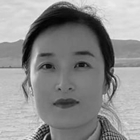 |
Xiaojuan Ni (Montana State University, USA)
Dr. Xiaojuan Ni is an Assistant Professor in the Department of Chemistry and Biochemistry at Montana State University. She received her Ph.D. from the University of Utah in 2020 (advisor: Prof. Feng Liu) and subsequently joined the University of Arizona, where she worked with Prof. Jean-Luc Brédas as a Postdoctoral Researcher (2020 to 2024) and as a Research Scientist (2024 to 2026). Her research lies at the intersection of materials chemistry, condensed matter physics, and computational materials science, with a particular focus on understanding fundamental structure–property relationships and designing materials with desirable electronic, optical, magnetic, and topological properties for real-world applications. She currently serves on the Community Board of Materials Horizons and the Next Generation Board of PhotoAggregate.
|
|
|
|
|
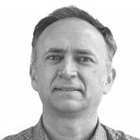 |
Diego Peña (University of Santiago de Compostela, Spain)
Prof. Peña was graduated in Chemistry at the University of Santiago de Compostela in 1998, where he also obtained his PhD degree under the guidance of Profs. Enrique Guitián and Dolores Pérez, working in transition metal-catalyzed cycloaddition reactions of arynes (2001, Special Doctorate Award).
He spent short predoctoral stays in the groups of Profs. Eric N Jacobsen (1999, Harvard University), Paul Knochel (2000, LMU, Munich) and Antonio M. Echavarren (2001, UAM, Madrid). During 2002 and 2003 he joined the group of Prof. Ben L. Feringa (Groningen University, The Netherlands) as a Marie Curie postdoctoral fellow working on asymmetric catalysis, with short research stays in the group of Prof. Hans de Vries (DSM, Geleen, The Netherlands).
In 2004 he returned to the University of Santiago de Compostela as Ramón y Cajal researcher. In 2008 he got an Associate Professor position and in 2020 he was promoted to Full Professor (currently on sabbatical). In 2024 he got an Oportunius Research Professor position at CiQUS.
|
|
|
|
|
 |
Emilio Manuel Pérez Álvarez (IMDEA Nanociencia, Spain)
Prof. Emilio M. Pérez is Senior Research Professor and Director of IMDEA Nanociencia. His scientific trajectory is defined by the development of unconventional chemical tools to modify and understand low-dimensional materials. After obtaining his PhD from the University of Edinburgh under the supervision of Prof. David Leigh, and a postdoctoral stay at the Universidad Complutense de Madrid with Prof. Nazario Martín, he joined IMDEA Nanociencia in 2008 as a Ramón y Cajal Researcher. His research interests focus on 1) Carbon Nanotubes, where hee pioneered the use of the mechanical bond, creating a new class of materials known as mechanically interlocked derivatives of carbon nanotubes (MINTs). 2) 2D Materials and Heterostructures: developing improved methods for the liquid-phase exfoliation of ultrathin materials and their chemical functionalization, for their integration into functioning optoelectronic devices. and 3) Fundamental Supramolecular Chemistry: Utilizing optical tweezers single-molecule force spectroscopy to measure and understand the non-covalent forces that govern molecular recognition.
He has held ERC Starting and Proof-of-Concept grants, with results transferred to industry through a collaboration with Nanocore ApS. He received the 2024 RSEQ Research Excellence Prize and appears consistently in the Stanford ranking of the top 2% most-influential scientists.
|
|
|
|
|
 |
Miguel Ángel Piqueras (TECNOBIT - Grupo Oesia, Spain)
|
|
|
|
|
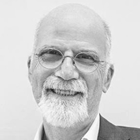 |
Maurizio Prato (CIC Biomagune, Spain)
|
|
|
|
|
 |
Aleksandra Radenovic (EPFL, Switzerland)
Aleksandra Radenovic received her master's degree in physics from the University of Zagreb in 1999 before joining Professor Giovanni Dietler's Laboratory of Physics of Living Matter in 2000 at University of Lausanne. There she earned her Doctor of Sciences degree in 2003. In 2003 she was also awarded a research scholarship for young researchers from the Swiss Foundation for Scientific Research which allowed her to spend 3 years as a postdoctoral fellow at the University of California, Berkeley (2004-2007). Before joining EPFL as Assistant Professor in 2008 she spent 6 months at NIH and Janelia Farm. In 2010 she received the ERC starting grant and in 2015 SNSF Consolidator grant. Her group is interested in using novel nanomaterials and single molecule experimental techniques to study fundamental questions at nanoscale.
|
|
|
|
|
 |
Stephan Roche (ICREA / ICN2, Spain)
Prof. Stephan Roche is a theoretician with more than 25 years’ experience in the study of transport theory in low-dimensional systems, including graphene, carbon nanotubes, semiconducting nanowires, organic materials and topological insulators. He has published more than 250 papers in journals such as Nature, Review of Modern Physics, Nature Physics, Nano Letters and Physical Review Letters and he is the co-author of the book titled “Introduction to Graphene-Based Nanomaterials: From Electronic Structure to Quantum Transport” (Cambridge University Press, 2020-second edition). He received the qualification to supervise PhD students from the Université Joseph Fourier (Grenoble, France) in 2004, and since then he has supervised more than ten PhD students and about 25 postdoctoral researchers in France, Germany and Spain. In 2009 Prof. Roche was awarded the Friedrich Wilhelm Bessel Research Award by the Alexander Von-Humboldt Foundation (Germany) and, since 2011, he has been actively involved in the European Graphene Flagship project as deputy leader of the Spintronics Work Package (WP). He is serving as leader of this WP since April 2020 and will continue until March 2023. He is also Division Leader of the Graphene Flagship.
|
|
|
|
|
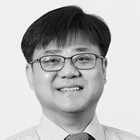 |
Hyeon Suk Shin (Sungkyunkwan University (SKKU), South Korea)
Hyeon Suk Shin is the director of IBS Center for 2D Quantum Heterostructures at SKKU and a professor at Department of Energy & Department of Chemistry, SKKU. Before joining IBS center and SKKU, he was a UNIST endowed chair professor at Department of Chemistry, Ulsan National Institute of Science and Technology (UNIST), Korea. He received his PhD from Department of Chemistry at POSTECH in 2002. After working as a postdoctoral fellow at University of Cambridge, UK and subsequently as a research Professor at POSTECH, he joined UNIST in 2008 and recently moved to SKKU to become the director of the IBS center at SKKU in 2024. He received ‘Man Jung Han Academic Award’ (Korean Chemical Society) in 2025, ‘Scientist of the Month’ award (Ministry of Science and ICT) in 2023, Grand Academic Award (UNIST) in 2023, 'Top 100 National R&D Outstanding Achievements' award (Ministry of Science and ICT) in 2021, Sigma-Aldrich Excellent Chemist Award (Korean Chemical Society) in 2021, Basic Researcher of the Year award (Ministry of Science and ICT, Republic of Korea) in 2020, Creative Knowledge Award (Minster Award by Ministry of Science, ICT, and Future Planning) in 2015, outstanding researcher award (Materials Chemistry Division, KCS) in 2015, the Faculty of the Year award of UNIST in 2014, and the Minister award of Ministry of Knowledge Economy, Korea in 2012. His current research focuses on 2D quantum (heterostructures) materials and their quantum phenomena as well as amorphous counterparts of 2D materials.
|
|
|
|
|
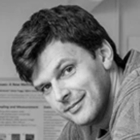 |
Alexandr Talyzin (Umeå University, Sweden)
Alexandr Talyzin is a Professor in the Department of Physics at Umeå University, Sweden. He earned his PhD in Materials Chemistry from Uppsala University in 2001. Prof. A.V. Talyzin has over 30 years of research experience and more than 170 peer-reviewed publications. Over the past two decades, his research was mostly focused on synthesis, chemical modification, and characterization of 2D materials: graphite oxides, graphene oxides, and multilayered graphene oxide materials. His research interests also included other carbon-based materials, such as fullerenes, carbon nanotubes, and activated carbons. Currently, his research focuses on the synthesis of novel two-dimensional materials, particularly MXenes and graphene derivatives, for applications in energy storage and sorption of pollutants from waste solutions.
|
|
|
|
|
 |
Ester Vázquez (University of Castilla-la Mancha, Spain)
Ester Vázquez obtained her Ph.D. degree from the University of Castilla-la Mancha (UCLM) in 2000. She performed her doctoral research mainly in the Microwave and Sustainable Chemistry group of UCLM, working on microwave-assisted organic reactions in dry media. She also spent a few months at the University of Zaragoza, studying silica-supported Lewis acids for catalysis and at the Karolinska Institute in Stockholm, working on microwave applications in radiolabelling tracers for positron emission tomography (PET). After finishing her Ph.D., she carried out her postdoctoral training in Trieste, Italy, working on biological applications of fullerenes and new fullerene derivatives in the group of Professor Maurizio Prato, in the frame of a European Research Training Network. She then joined the Faculty of Chemistry at UCLM in 2001, completing other short stays in Trieste in 2002 and 2003. In 2007 she received the “Ibn Wafid de Toledo” Price for young researchers of Castilla-La Mancha. She was promoted to Associate Professor in 2010, and to Full Professor in 2019. She became director of the Instituto de Investigación Científica Aplicada (IRICA) in 2017 and she is co-founder of the spin- off Biograph Solutions.
|
|
|
|
|
 |
Félix Zamora (Autonomous University of Madrid, Spain)
For as long as I can remember, I've had a thirst for discovery, and this led me to science. I graduated with a degree in Chemical Sciences in 1990 from the Autonomous University of Madrid (UAM). I obtained a postgraduate scholarship from the UAM and, subsequently, a teaching assistant position that allowed me to complete my doctoral thesis and begin teaching. The research I conducted during my doctoral thesis on antitumor compounds brought me into contact with the pharmaceutical industry and stimulated my interest in knowledge transfer. In 1994, I earned my doctorate from the UAM. I received a scholarship Human Capital and MobilityI received a postdoctoral grant from the EU to pursue postdoctoral studies at the University of Dortmund (Germany). Following this, I completed another research stay at the University of Virginia (USA). I then rejoined the Department of Inorganic Chemistry at the Autonomous University of Madrid (UAM) as an Assistant Professor, carrying out teaching and research duties. In 2002, I obtained a position as Associate Professor and in 2020 as Full Professor within the Community of Madrid's Excellence Program. I have had the opportunity to work as a visiting researcher at Newcastle University (UK) and as a visiting researcher at the National University of Singapore (since 2016). I am currently affiliated with the IMDEA Nanoscience Foundation, the Institute for Advanced Research in Chemical Sciences, and the Institute for Condensed Matter Physics.
|
|
|
|
|
|
|